
Exchange with Delft University of Technology
Delft, Netherlands • FALL Or SPRING
Spring 2027 Application Cycle is Closed. Fall 2027 Application Cycle will open in Spring.

What is an ArtCenter Exchange Program?
Spend a term at one of ArtCenter’s partner institutions around the world! Earn up to 15 transfer credits. You will pay ArtCenter tuition for the term and maintain your financial aid package as eligible. Housing and other expenses are additional.
Apply by:
March 1 — Fall term abroad
September 1 — Spring term abroad
How To Apply
Step 1 — Apply through Global Programs — no fee to apply
Submit your application through the Global Programs Application Portal.
Step 2 — Department Nomination & Partner University Application
If nominated by your department, you will then submit a second application directly to Delft University.
Academics
Majors: Interaction Design • Product Design • Spatial Experience Design • Transportation Design
Credit
Transfer up to 15 credits to ArtCenter.
Schedule
Fall term: early September – late January/early February*
*The Fall term dates overlap with the spring term at ArtCenter. Students are not allowed to depart early from the TU Delft exchange program and must take a leave of absence for the spring term.
Spring term: early February – mid-June*
*The Spring term dates overlap with the summer term at ArtCenter. Students are not allowed to depart early from the TU Delft exchange program and and must take a leave of absence for the summer term.
Eligibility
• Have completed at least four undergraduate terms
• Have at least one term remaining at ArtCenter after returning
• Maintain a minimum cumulative GPA of 3.0
• Not be on academic or disciplinary probation at the time of application
If you are not sure if you meet all the minimum eligibility requirements, you are still welcome to apply.
Cost
Administrative fee
After you are nominated by your department and accepted by the exchange university, you will pay a $250 fee to ArtCenter’s Global Program Office to confirm your participation.
ArtCenter Tuition
Tuition for this exchange program is the same as full-time ArtCenter tuition for the term, including financial aid as eligible.
Additional estimated expenses to consider
• Housing (varies by location)
• Round-trip international airfare: up to $1,500
• Passport: $135
• Visa (if required) and student residence permit (if required)
• Supplemental health insurance policy (if required by the location)
• School project supplies (as needed)
• Daily living expenses (meals, transportation, etc.): $500–$600 per month, varies by location and personal budget
Financial aid and scholarships are not available from the exchange institution.
Additional scholarships may be available from outside sources: artcenterstudyaway.com/pay-for-study-away
Housing
Check out TU Deflt’s housing resources.
ABOUT THE PROGRAM:


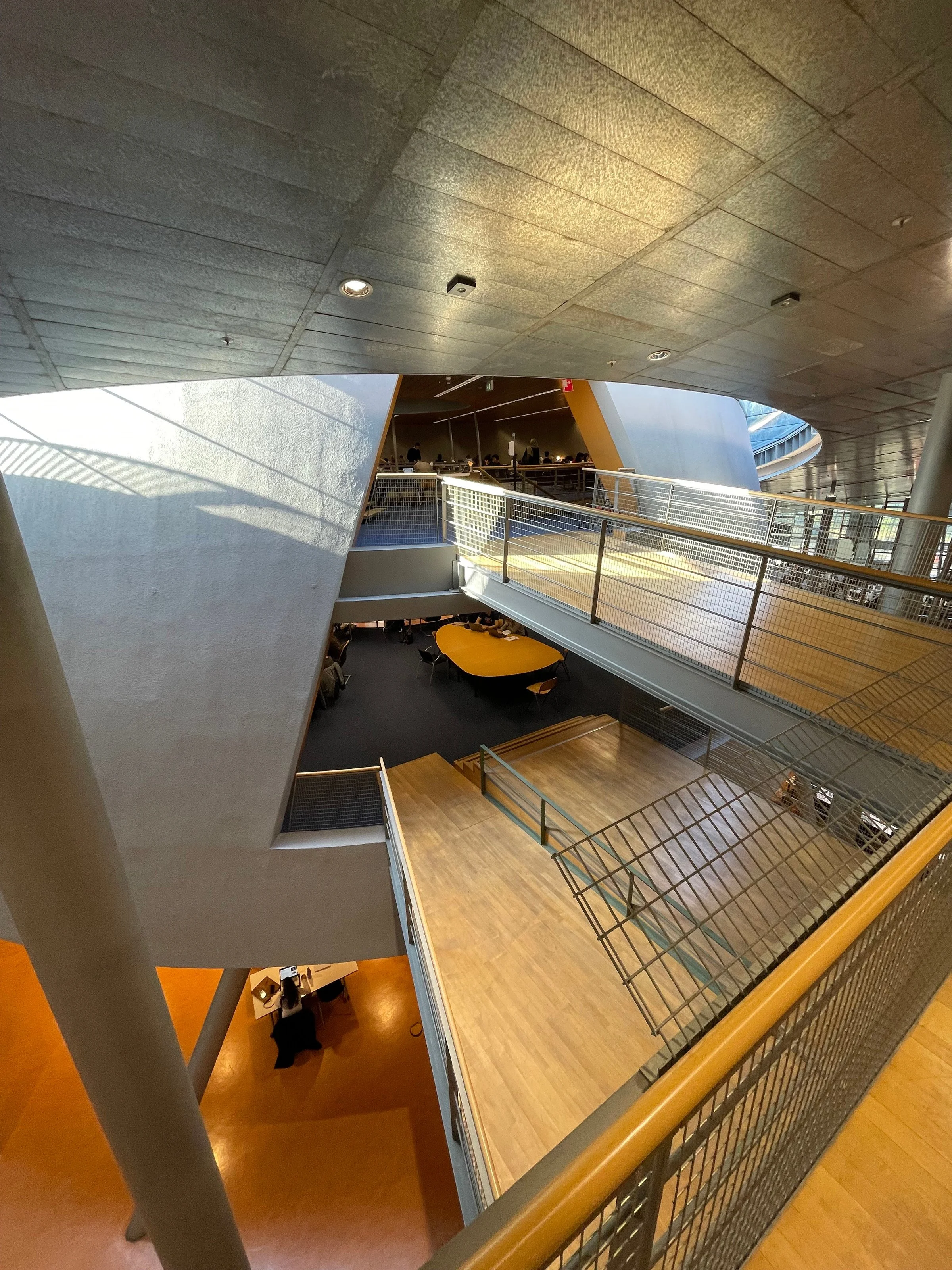
Delft University of Technology (TU Delft) is one of the world’s leading technical universities, known for its focus on engineering, innovation, sustainability, and design research.
ArtCenter’s exchange agreement is with the university’s Faculty of Industrial Design Engineering, which offers interdisciplinary coursework in areas such as:
Industrial Design
Interaction Design
Mobility
Sustainability
Emerging Technologies
Prototyping
TU Delft combines research-driven education with hands-on experimentation, supported by advanced fabrication facilities, collaborative studios, and an international academic community.
The historic campus is one of the oldest university campuses in the world and larger than downtown Delft itself.
Course Information
Exchange students apply to fixed course packages during the application process and rank their first, second, and third choices. Once admitted, course packages cannot be changed.
Eligibility
Master’s courses are open to:
Master’s students
Bachelor students who have completed at least 6 terms of study
Additional Information
TU Delft Exchange Student Information
Course Options
Video Overview
Housing Resources
-
Delft is known for its historic canals, walkable city center, and strong design and engineering culture.
The city blends historic Dutch architecture with an active academic environment shaped by Delft University of Technology (TU Delft), one of the world’s leading technical universities. Delft is also recognized for its connection to Delft Blue pottery and painter Johannes Vermeer.
Students Enjoy
Walkable and bike-friendly streets
Historic canals and architecture
Strong international student community
Design, technology, and innovation culture
Easy access to major Dutch cities
Nearby Highlights
Delft Blue workshops
Medieval city center
Canal districts
Museums and cafés
Still have questions?
Use our online calendar to schedule an appointment!
Previous Course Offerings
The following courses are examples of previous exchange offerings and may vary by term. Students should refer to the exchange university website for the most current course information and availability.
Fall Term Bachelor Courses
-
30 ECTS/15 credits
We can learn a lot from the automotive industry, which is one of the most complex industries in terms of structure (bringing together different disciplines), size and economic entwinement with society. Its products show the maximum of what is achievable within the principle of economy of scale, through the application of knowledge on aesthetics, technology and usability.
On the other hand, we (and the industry) know that future mobility is a challenge that cannot be addressed in the narrow scope of a single industry. How to design mobility that addresses both individual and collective concerns? How to design mobility means that are meaningful within society as a whole? That is our big challenge. Future mobility requires a far more holistic, i.e. context driven design approach.
Our stand is, that when you are capable of dealing with the complexity of the mobility system by the knowledge and experience you acquired in the automotive domain, you have the capabilities to untangle other complex systems.The program includes the following mandatory courses:
Human Mobility (3 ECTS)
Automotive Styling (4 ECTS)
Automotive Technology (7 ECTS)
Mobility Systems Design (7 ECTS)
Automotive Skills (6 ECTS)
Automotive Safety + Human Factors (3 ECTS)
-
Combines interaction design, experimental architecture, and prototyping technologies to create interactive spaces and environments.
Topics include:
Interaction Studies (3 ECTS)
Design Strategies (3 ECTS)
Design and Prototyping Studio (15 ECTS)
Design Skills (4.5 ECTS)
Technology for Designers (4.5 ECTS)
-
Explores sustainability, systemic design, ethics, circular design, and societal change through interdisciplinary teamwork.
Topics include:
Sustainability issues and societal change (3 ECTS)Demystify Green (3 ECTS)
Design Approaches (5 ECTS)
Masterclasses (4 ECTS)
Value Sensitive Design (3 ECTS)
Design Challenge (12 ECTS)
-
Focuses on digital fabrication, emerging materials, and immersive technologies through functional prototype development.
Topics include:
Prototyping with/for Digital Fabrication (PDF) (9 ECTS)
Prototyping with/for Emerging Materials (PEM) (6 ECTS)
Advanced Prototyping Project (APP) (15 Credits)
Spring Term Bachelor Courses
-
This course is mandatory for all spring term exchange students.
Examines how design can address social challenges through future-oriented and human-centered design methodologies.
Topics include:
Social Design
Human Needs & Behavior
Future Narratives
Design Research
-
10 ECTS --Refer to this link for more instructions and descriptions for each course.
Students choose electives in areas such as:
Circular Economy
Mobility
Brand Strategy
Service Design
Design Analytics
Machine Learning
Manufacturing
-